

Mục lục bài viết 9 phần
Collector có thể vẫn nhận dữ liệu nhưng dashboard thiếu flow vì exporter sampling, template hết hạn, UDP drop, clock lệch hoặc pipeline enrichment quá tải. Kiểm thử phải đối chiếu traffic gốc với record qua từng tầng thay vì chỉ nhìn ingest rate.
Bài viết giúp bạn
- Flow telemetry cần chứng minh gì?
- Topology và điểm quan sát
- Traffic profile và exporter variables
Flow telemetry cần chứng minh gì?
#IPFIX/NetFlow tóm tắt traffic thành record, không phải bản sao packet đầy đủ. Câu hỏi đúng là record có đại diện đầy đủ cho traffic theo policy hay không: đủ key field, byte/packet counter, time, direction, interface, sampling metadata và exporter identity.
Tách loss ở exporter, network transport, collector input, parser/template, queue, enrichment, database và query/dashboard. Ingest socket nhận packet không chứng minh record đã searchable hoặc còn tồn tại đúng retention.
Topology và điểm quan sát
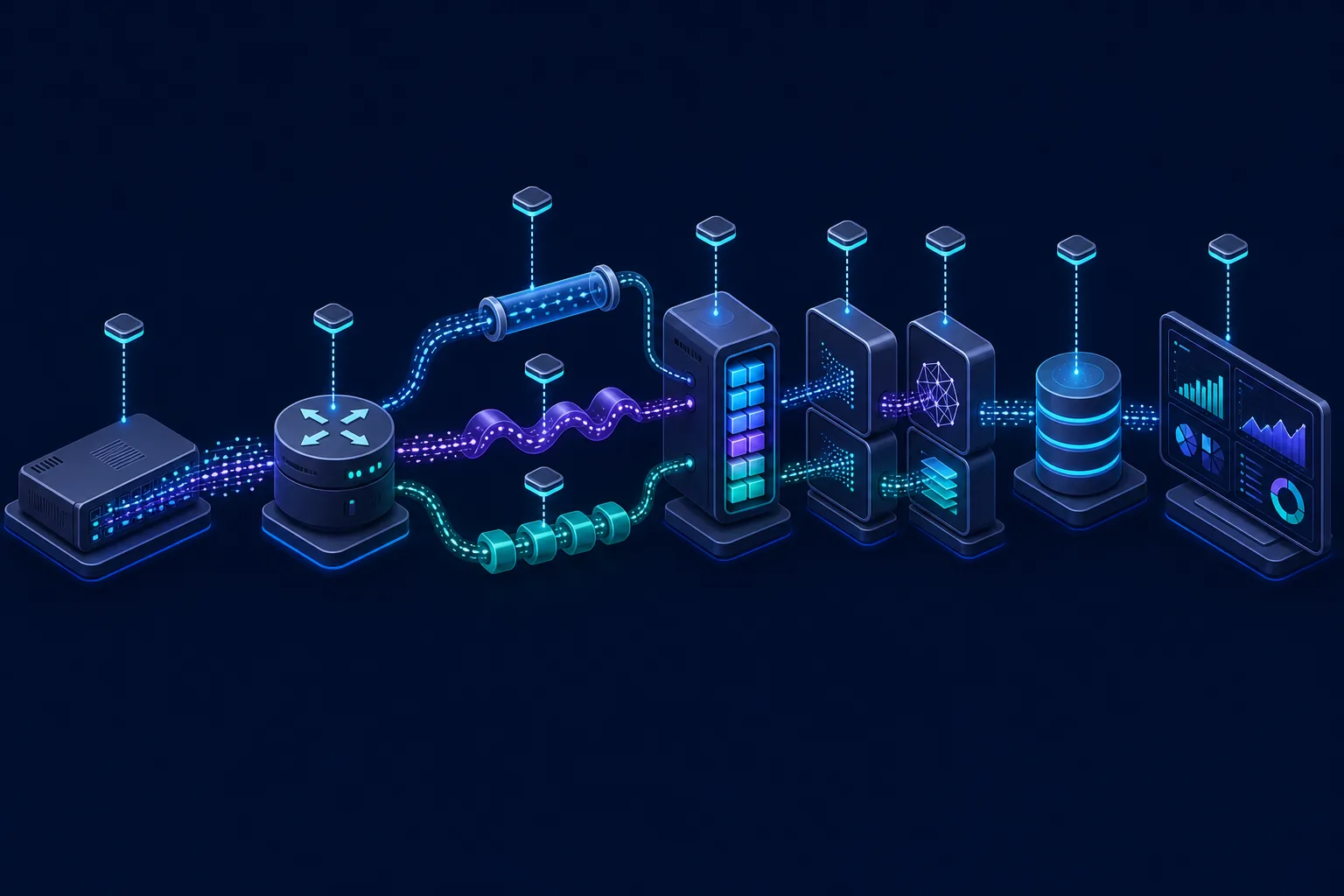
#Topology gồm traffic generator qua DUT/exporter, đường export, primary/secondary collector, message/processing pipeline và storage/query. Capture traffic data plane và export packets; thu exporter counter, interface drop, collector queue, parser error, database write và query result.
Tạo traffic có ground truth: flow ID, 5-tuple, byte/packet count, start/end time và expected interface. Gắn exporter observation domain với device/interface inventory.
Traffic profile và exporter variables
#Chạy short/long flow, TCP/UDP/ICMP, IPv4/IPv6, high-cardinality 5-tuple, elephant flow, microflow burst và asymmetric traffic. Khóa active/inactive timeout, cache size, sampling, aggregation, biflow/uniflow, interface direction và export transport.
Sampling phải được ghi trong kết quả; không so sampled record count trực tiếp với packet truth. Với NAT/tunnel/application fields, xác nhận exporter có capability và license theo version.
- Profile: Known flows · Mục tiêu: Field/counter correctness · Biến kiểm soát: 5-tuple, byte, packet
- Profile: Microflow burst · Mục tiêu: Cache/export pressure · Biến kiểm soát: flow/s, duration
- Profile: Long-lived · Mục tiêu: Active timeout · Biến kiểm soát: refresh interval
- Profile: Idle flows · Mục tiêu: Inactive timeout · Biến kiểm soát: gap
- Profile: Sampled · Mục tiêu: Estimation metadata · Biến kiểm soát: rate/algorithm
- Profile: Template change · Mục tiêu: Parser lifecycle · Biến kiểm soát: template ID/fields
KPI và bằng chứng
#KPI gồm expected/exported/received/parsed/stored/queryable records; missing/duplicate; byte/packet counter error; export latency; end-to-end availability latency; template error; queue depth; dropped datagram; CPU/memory/storage IOPS và query latency.
Tạo reconciliation theo test ID. Nếu 100.000 expected flows, báo số bị mất ở từng checkpoint, không chỉ “99% dashboard accuracy”. Với aggregation hoặc sampling, dùng expected transformation rõ ràng.
Độ trễ phải chia thành export delay, transport delay, parse/enrichment delay và indexing delay. Người vận hành quan tâm lúc flow xuất hiện trong truy vấn/cảnh báo, trong khi exporter metric chỉ phản ánh lúc datagram được gửi. Đặt timestamp/correlation ở từng checkpoint để xác định backlog nằm ở đâu.
Đo field completeness theo use case. Security analytics có thể cần source/destination, direction, TCP flags và NAT context; capacity planning cần byte/packet, interface và sampling factor. Một record parse thành công nhưng thiếu field bắt buộc vẫn là lỗi chức năng.
Template, timestamp và field correctness
#IPFIX template mô tả Information Elements của data record. Collector mất template hoặc nhận data trước template có thể bỏ record. Test exporter restart, template refresh, collector restart, template ID reuse và schema change.
Kiểm tra timestamp source, start/end semantics, uptime-based vs absolute time theo protocol/version và clock offset. Sai timestamp có thể làm record rơi ngoài query window dù đã lưu.
Field correctness cần mapping ingress/egress interface, VLAN, AS, VRF, direction, sampler và exporter address. Enrichment từ CMDB/DNS có thể làm sai sau collector; giữ raw record để phân biệt.
Scale, overload và transport loss
#Tăng flow creation rate theo bậc, không chỉ bandwidth. Nhiều 64-byte microflow có thể bão hòa cache/export trong khi Gbit/s thấp. Theo dõi cache overflow, export packet drop, UDP receive buffer, parser queue và storage lag.
UDP không bảo đảm giao hàng; TCP/SCTP thay đổi failure/backpressure nhưng không tự giải quyết collector processing limit. Test phải theo transport thực tế. Khi collector overload, xác định exporter block, buffer hay drop theo implementation.
Tách sustained flow rate và burst rate. Collector có thể xử lý trung bình 500.000 record/s nhưng rơi record khi exporter đồng loạt flush active timeout. Làm lệch timer giữa exporter và chạy một test đồng bộ timer để đo worst case. Theo dõi kernel receive buffer, packet socket, parser thread và broker partition thay vì chỉ CPU tổng.
Nếu pipeline dùng Kafka/message bus, lưu consumer lag và retention của queue. Queue hấp thụ burst không có nghĩa dữ liệu kịp SLO; backlog có thể còn nhiều giờ sau khi input trở về bình thường. Stop condition nên dựa trên record loss hoặc lag recovery budget.

Failover, replay và retention
#Thử collector process stop, network interruption, storage unavailable và failover VIP/DNS. Đo record gap, duplicate, recovery và template re-establishment. Nếu exporter gửi đồng thời hai collector, xác nhận downstream dedup policy.
Kiểm tra retention bằng record có test ID qua hot/warm/archive tier, query window và deletion. “Lưu 30 ngày” cần chứng minh field/index thiết yếu vẫn query được, không chỉ file còn tồn tại.
Runbook thực hành
#Với multi-tenant collector, thêm traffic nền từ nhiều exporter và kiểm tra noisy-neighbor. Một exporter lỗi không được làm parser crash hoặc chiếm toàn bộ queue. Rate-limit/quarantine policy cần tạo cảnh báo và bảo toàn dữ liệu từ tenant khác.
Kiểm tra schema evolution bằng cách thêm/bớt Information Element trong môi trường lab. Raw record, normalized record và query schema phải có version/provenance. Nếu enrichment lookup thất bại, hệ thống nên phân biệt “unknown” với giá trị rỗng thực tế.
- 1. Ghi exporter/collector version, template và transport.
- 2. Tắt sampling để chạy correctness baseline nếu có thể.
- 3. Tạo tập flow ground truth nhỏ.
- 4. Đối chiếu field/counter/timestamp.
- 5. Thử active/inactive timeout và long flow.
- 6. Bật sampling/aggregation theo production.
- 7. Ramp flow/s và microflow burst.
- 8. Restart exporter/collector, đổi template và gây lỗi network.
- 9. Kiểm tra storage/query/retention.
- 10. Lưu raw export, counter, logs và reconciliation report.
- Tiêu chí: Record completeness · Pass/fail mẫu: Trong loss budget đã thống nhất
- Tiêu chí: Field accuracy · Pass/fail mẫu: Đúng schema/mapping
- Tiêu chí: Availability latency · Pass/fail mẫu: Dưới SLO từ flow end tới query
- Tiêu chí: Template recovery · Pass/fail mẫu: Không gap ngoài ngưỡng
- Tiêu chí: Overload behavior · Pass/fail mẫu: Có cảnh báo, loss được định lượng
- Tiêu chí: Retention · Pass/fail mẫu: Query được test ID trong thời hạn
Giới hạn của kết luận
#Flow telemetry không thay packet capture cho payload/forensic. Sampling làm giảm độ chính xác với traffic hiếm và short flow. Kết quả phụ thuộc exporter silicon/software, timeout, transport và collector schema.
Dashboard đúng với synthetic flow chưa chứng minh enrichment/identity trong production đúng. Chạy canary flow liên tục để theo dõi pipeline sau triển khai.
Khái niệm cần nhớ
- Baseline
- Dải giá trị bình thường được thu đủ lâu để làm mốc so sánh và đặt ngưỡng.
- SLA
- Cam kết chất lượng dịch vụ gắn với KPI, phạm vi, thời gian và cách đo cụ thể.
- Active test
- Phép đo dùng traffic tổng hợp được tạo có chủ đích giữa các điểm kiểm tra.
TÀI LIỆU ĐỐI CHIẾUTài liệu tham khảo4 nguồn +
Nội dung được biên soạn độc lập, theo hướng vendor-neutral và đối chiếu các tài liệu gốc dưới đây. Tính năng sản phẩm cần được kiểm tra lại theo phiên bản đang sử dụng.
NetVali ưu tiên nguồn tiêu chuẩn và tài liệu chính thức; phân biệt khuyến nghị triển khai với yêu cầu của tiêu chuẩn; không công bố thông số sản phẩm chưa gắn với phiên bản và điều kiện đo.